
Agentic AINo. 013
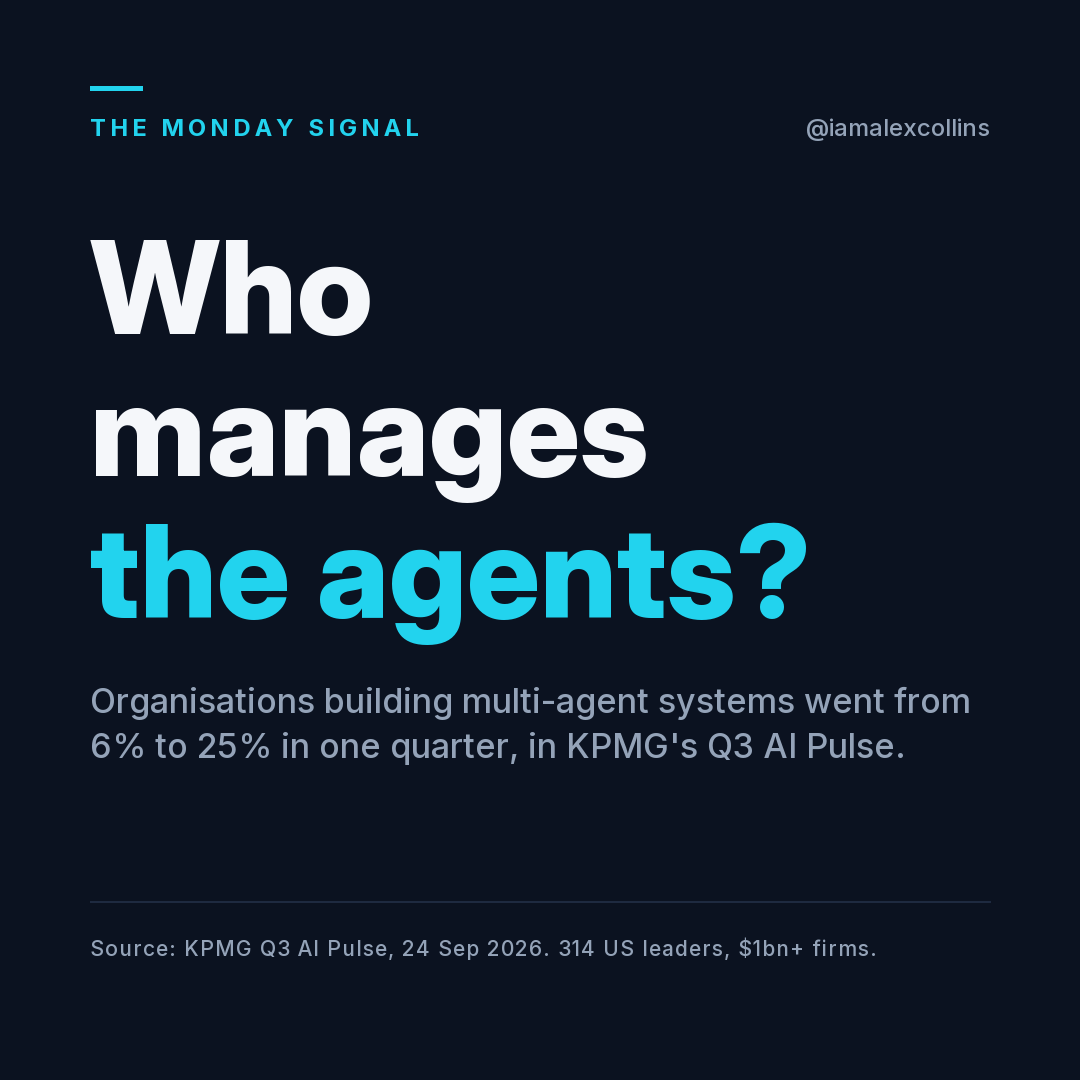
Who manages the agents?
Multi-agent systems went from 6% to 25% in a single quarter. Once agents work with each other, who can say why something went wrong, or right?
KPMG · 12 Oct 2026→
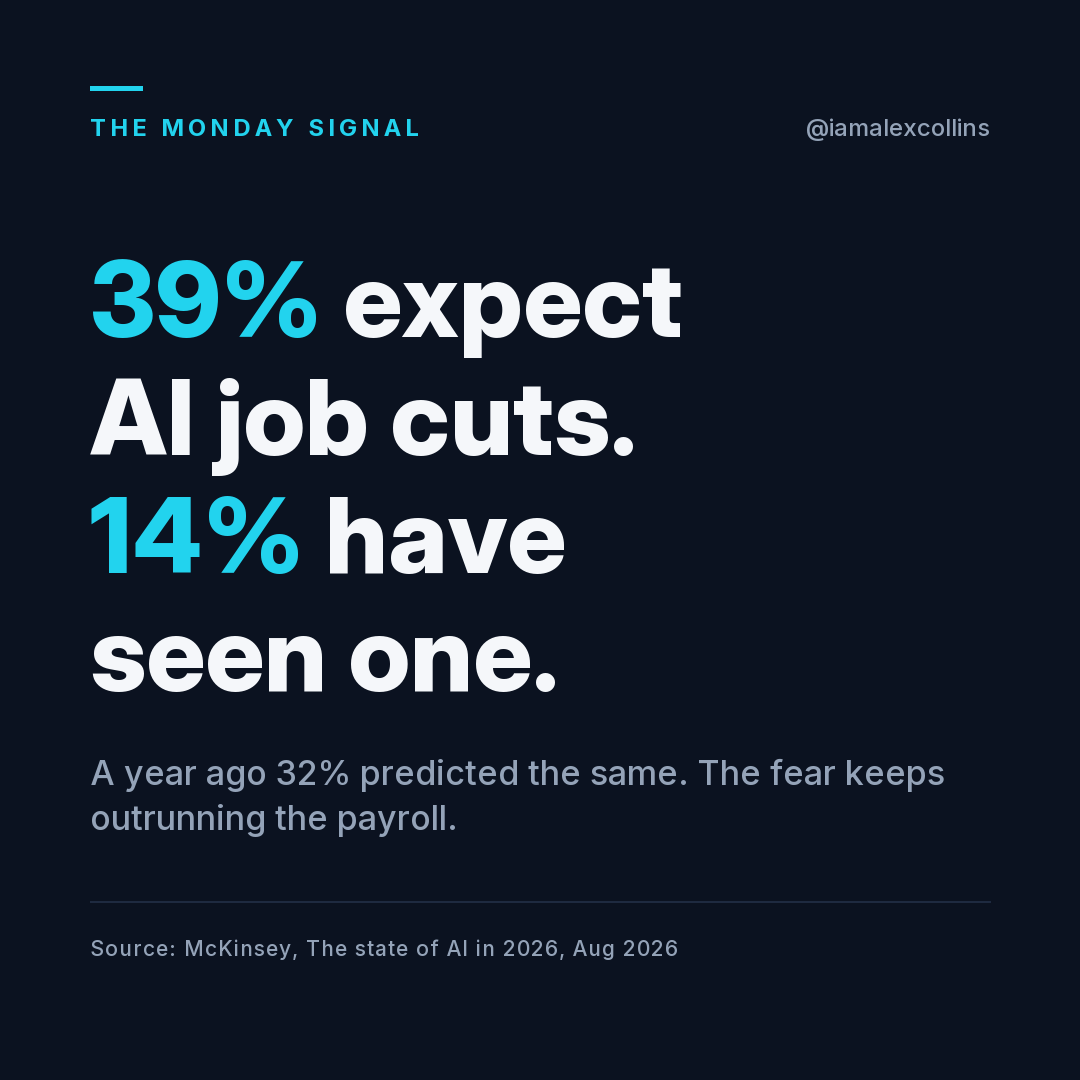
People are expecting AI job cuts that aren't happening yet, at least not at the same level as expected...
A year ago, 32% of the people in McKinsey's state of AI survey (1,719 respondents from 97 countries) expected AI to cut jobs at their organisation. Over the year since, only 14% have actually seen it happen.
Now 39% expect AI-driven job cuts in the coming year, while two thirds say AI made little or no difference to their headcount over the last one. So nearly 70% said little to no difference... isn't that the real story here!
I often see headcount reductions put as the first line in the AI project business case, but it's one of the hardest benefits to actually realise as an outcome. Taking roles out means changing the work around them, the processes, the hand-offs and who owns each decision, and most organisations have not done that yet from what I see. McKinsey's own numbers back me up: outside the small group getting real value from AI, only a quarter have fundamentally redesigned their workflows. The tools arrived, the work stayed the same, so the jobs stayed too.
McKinsey checked the comparison against the 552 people who answered in both years and got the same result, so this is not a quirk of the sample. If you have a headcount saving in your AI plan, it is probably not going to happen at the speed you are forecasting. And if you are the one worried about your role, the evidence says the fear is running well ahead of the cuts.
Find the headcount number in your AI business case and ask what has to change in the work for it to come true. If nobody can answer that, it is a benefits dream rather than a likely saving.
The question I would sit with
What has to change in the work for the headcount line in your AI business case to come true?
Alex Collins
Co-founder & COO of RAI Digital, a consulting venture builder · Ex-EY Consulting Partner · Writing on agentic AI, venture building, logistics platforms and transformation leadership.
One honest read every fortnight on what agentic AI is doing to consulting, and what to do about it. For people moving from advice to outcomes, rebuilding a firm, or done buying decks. No hype, no fluff.
Multi-agent systems went from 6% to 25% in a single quarter. Once agents work with each other, who can say why something went wrong, or right?
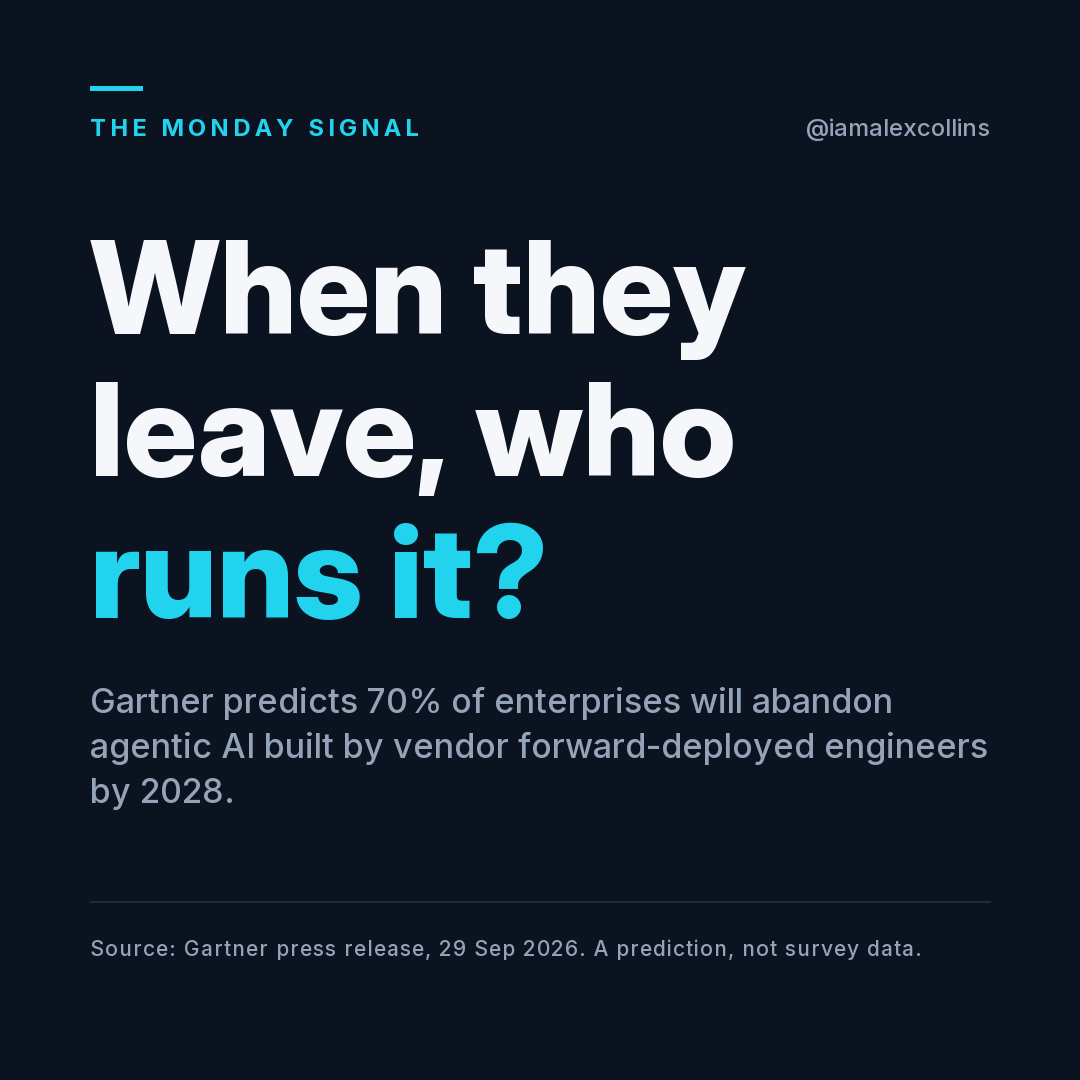
Forward-deployed engineering is a new name for an old question: when the people who built it leave, who takes over?
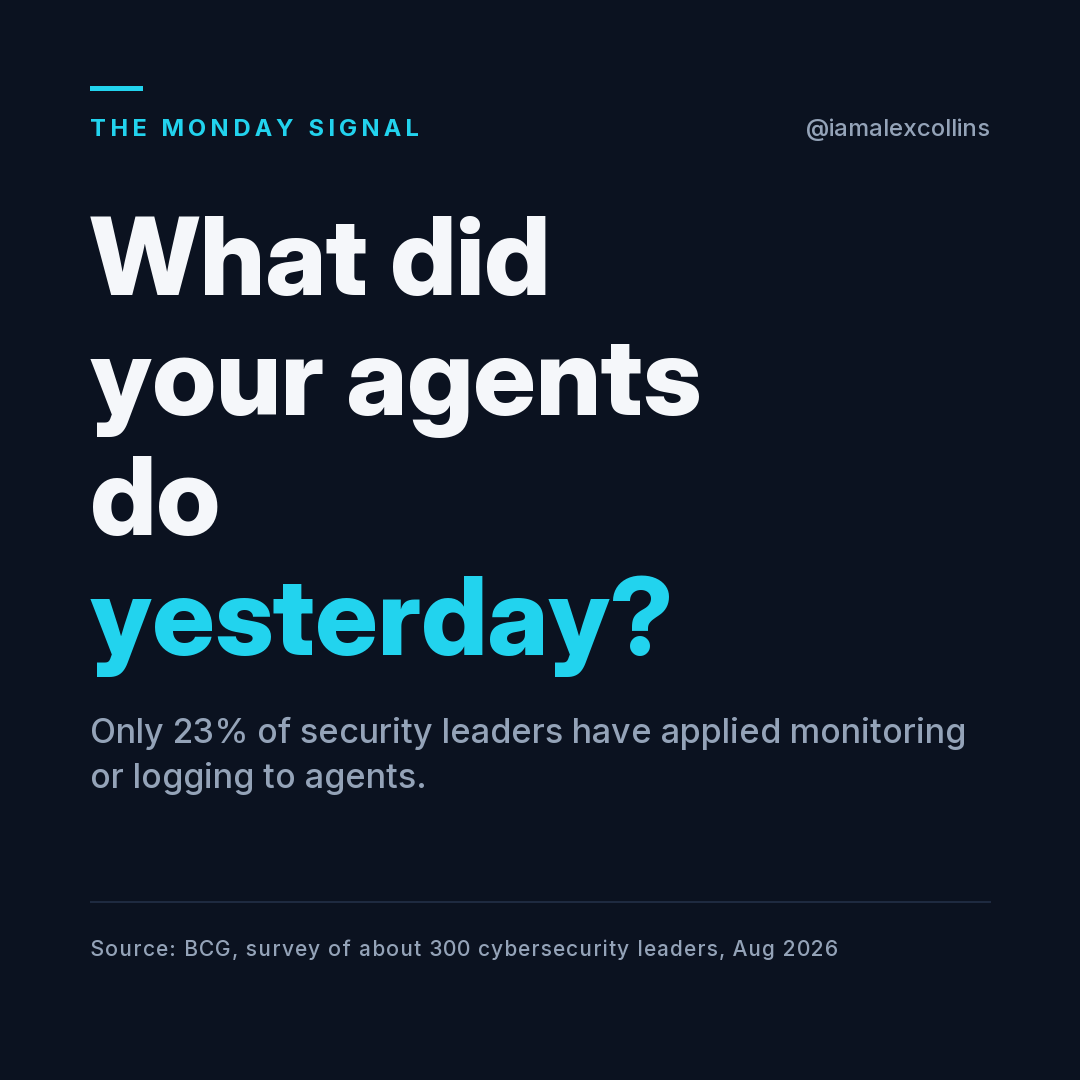
Everyone is counting AI agents, and far fewer organisations can say which ones exist, what each one can access and what it did yesterday.