
Agentic AINo. 013
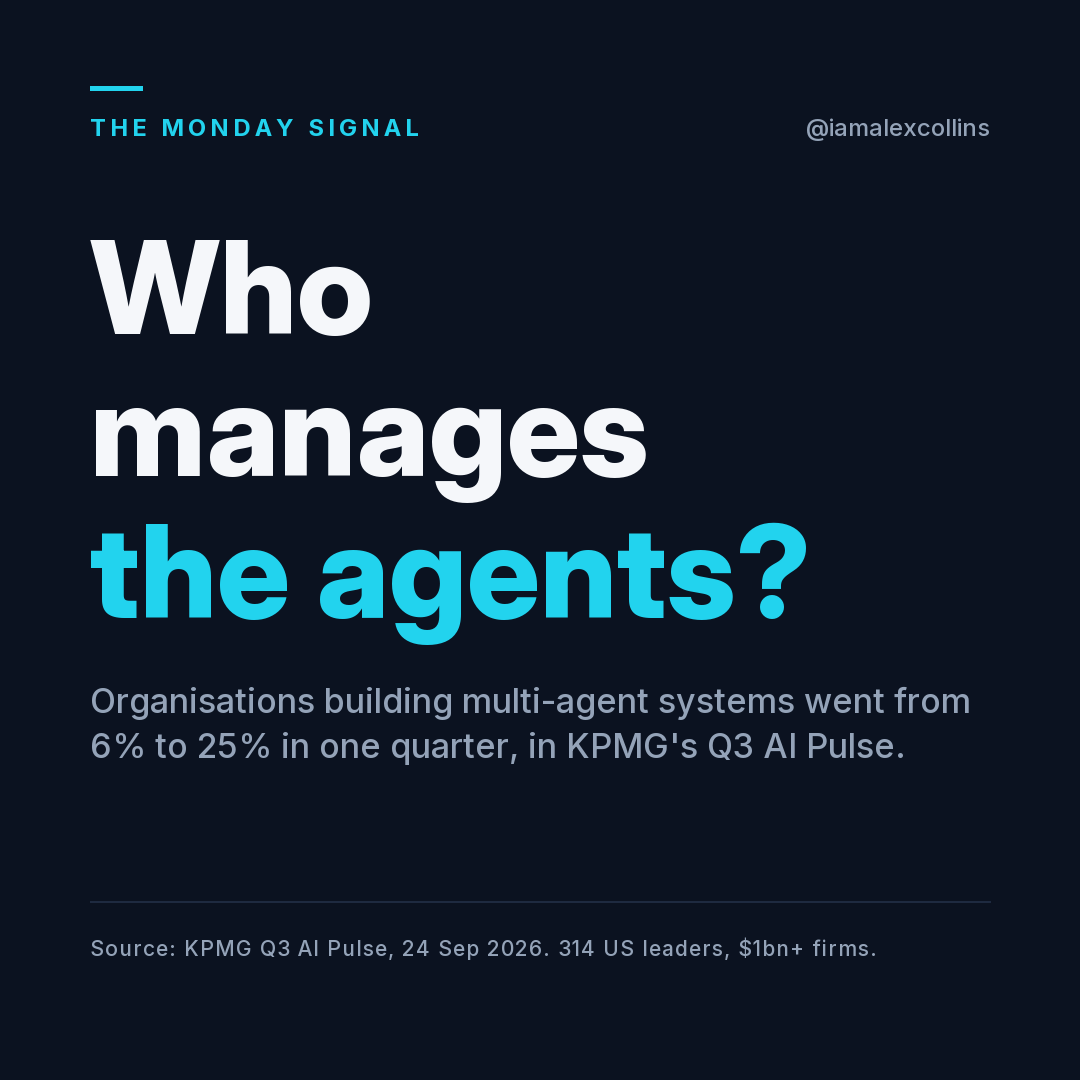
Who manages the agents?
Multi-agent systems went from 6% to 25% in a single quarter. Once agents work with each other, who can say why something went wrong, or right?
KPMG · 12 Oct 2026→
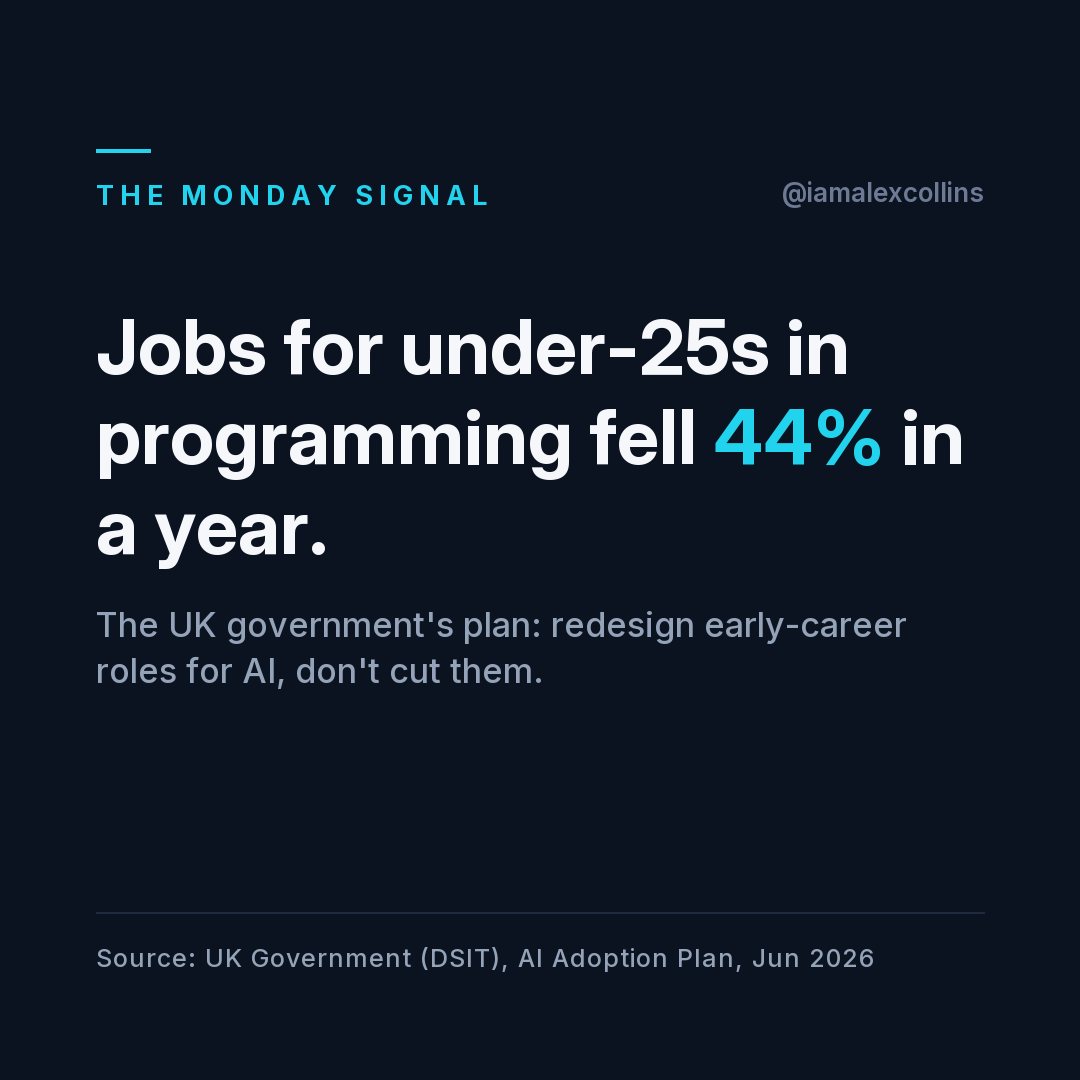
Jobs for under-25s in computer programming fell 44% in a single year, the first drop in UK digital-sector employment in a decade.
The UK government's new AI Adoption Plan flags it as a warning sign and lands on the right response: redesign early-career roles for the AI era, don't cut them.
What I like is the honesty. The plan admits there is no conclusive proof AI caused the fall, then argues we should act anyway, because if you wait for proof you have already lost a cohort. Its Early Careers Jobs Alliance asks employers to protect structured learning and redesign junior roles around judgement, rather than deleting the training ground for the next generation of managers.
This is the talent-debt point, made by a government: cutting the junior rung looks efficient this year and shows up as missing capability in five.
The question I would sit with
If your firm is thinning its junior intake, are you saving money or borrowing against your own pipeline?
Alex Collins
Co-founder & COO of RAI Digital, a consulting venture builder · Ex-EY Consulting Partner · Writing on agentic AI, venture building, logistics platforms and transformation leadership.
One honest read every fortnight on what agentic AI is doing to consulting, and what to do about it. For people moving from advice to outcomes, rebuilding a firm, or done buying decks. No hype, no fluff.
Multi-agent systems went from 6% to 25% in a single quarter. Once agents work with each other, who can say why something went wrong, or right?
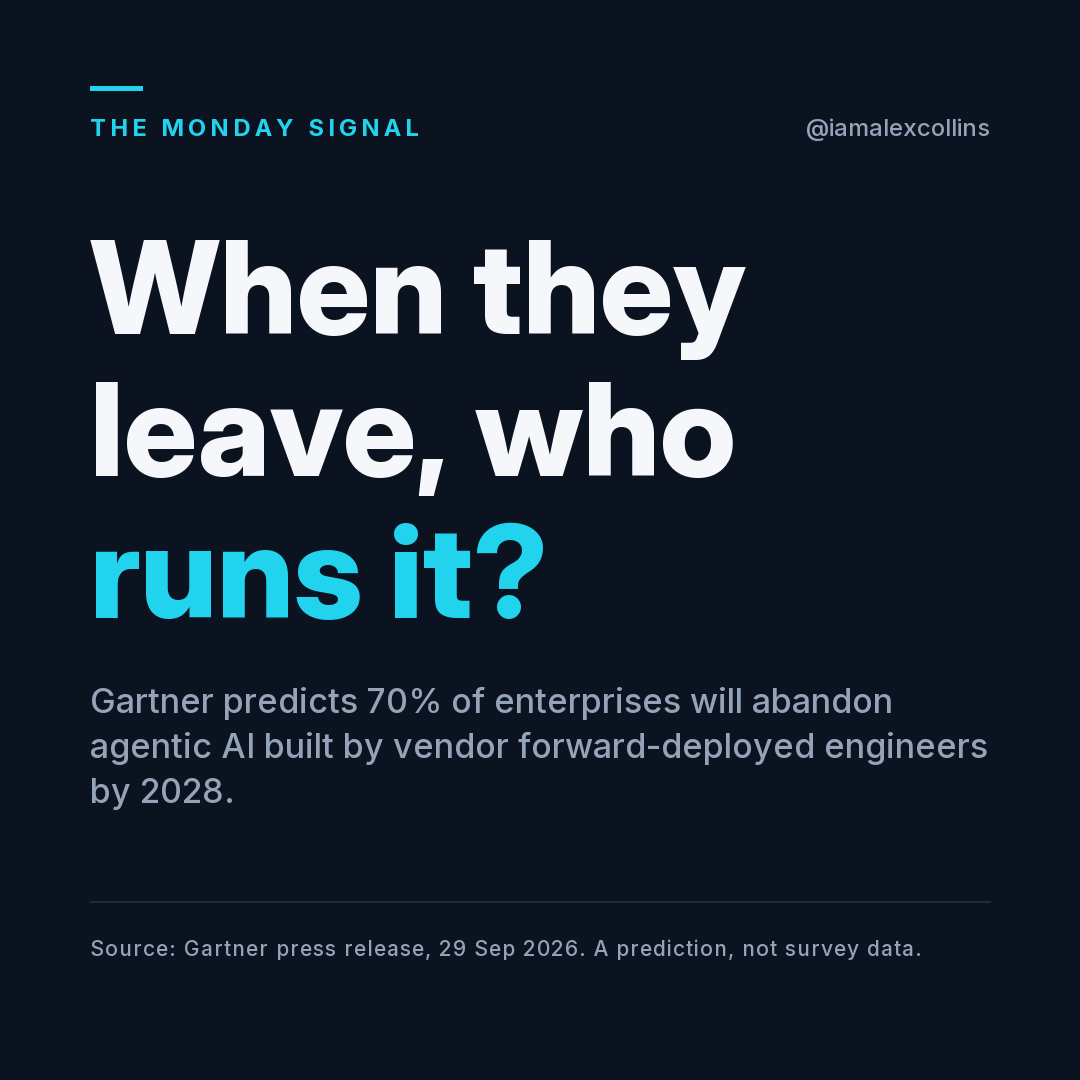
Forward-deployed engineering is a new name for an old question: when the people who built it leave, who takes over?
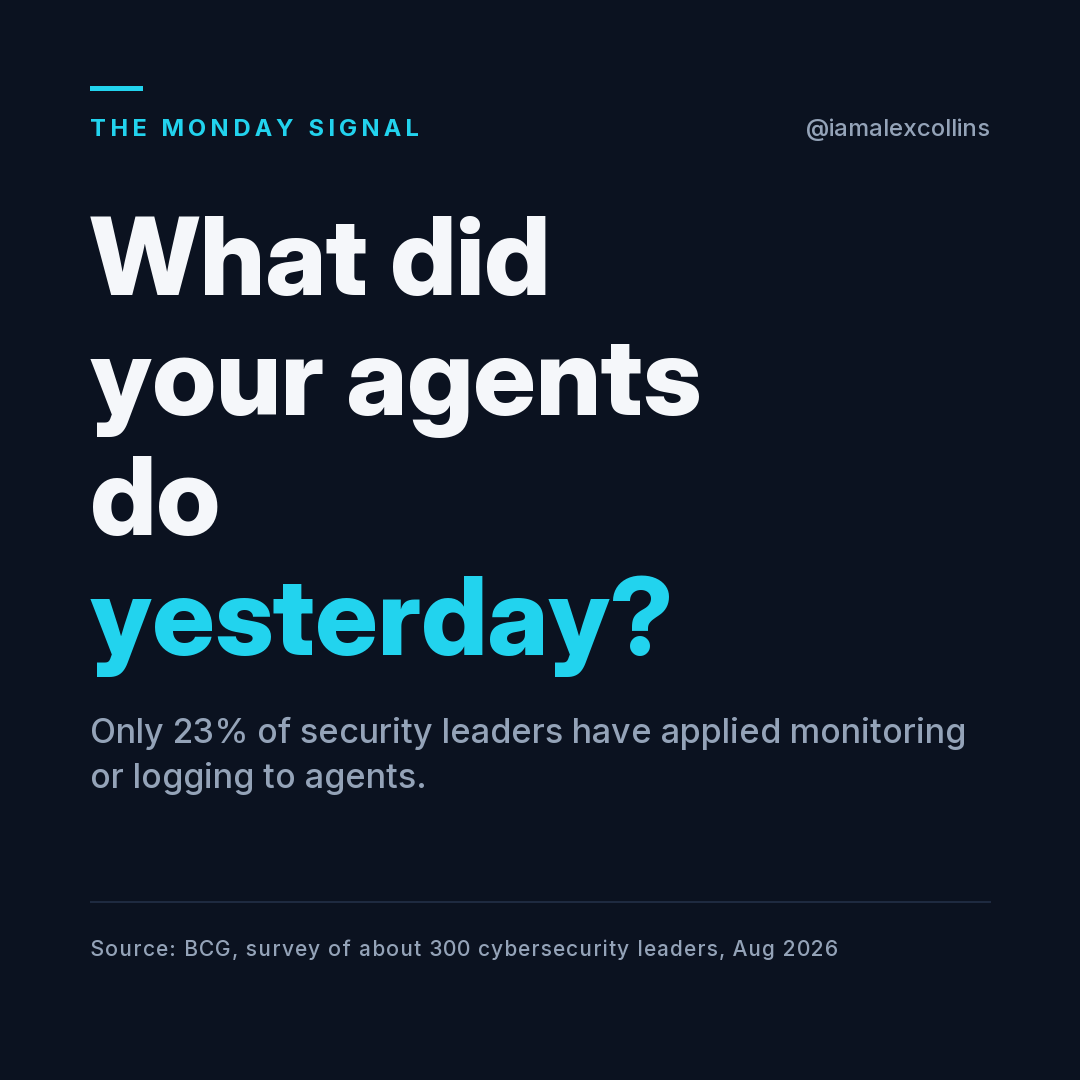
Everyone is counting AI agents, and far fewer organisations can say which ones exist, what each one can access and what it did yesterday.