
Agentic AINo. 013
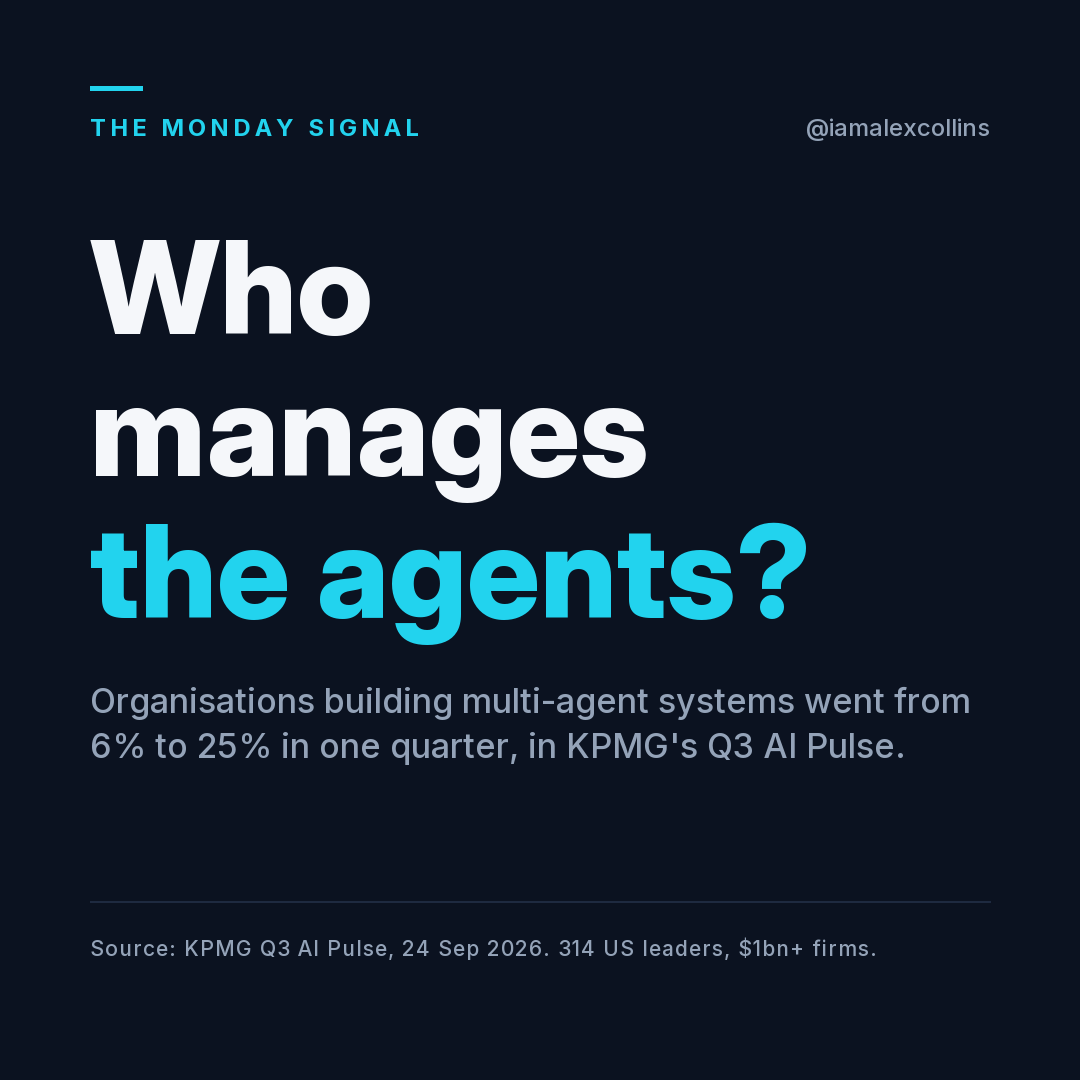
Who manages the agents?
Multi-agent systems went from 6% to 25% in a single quarter. Once agents work with each other, who can say why something went wrong, or right?
KPMG · 12 Oct 2026→
The read
Citizens Are Open to Public AI Services. Governments Must Seize the Opportunity. (2026 Digital Government Citizen Survey)BCG · July 2026
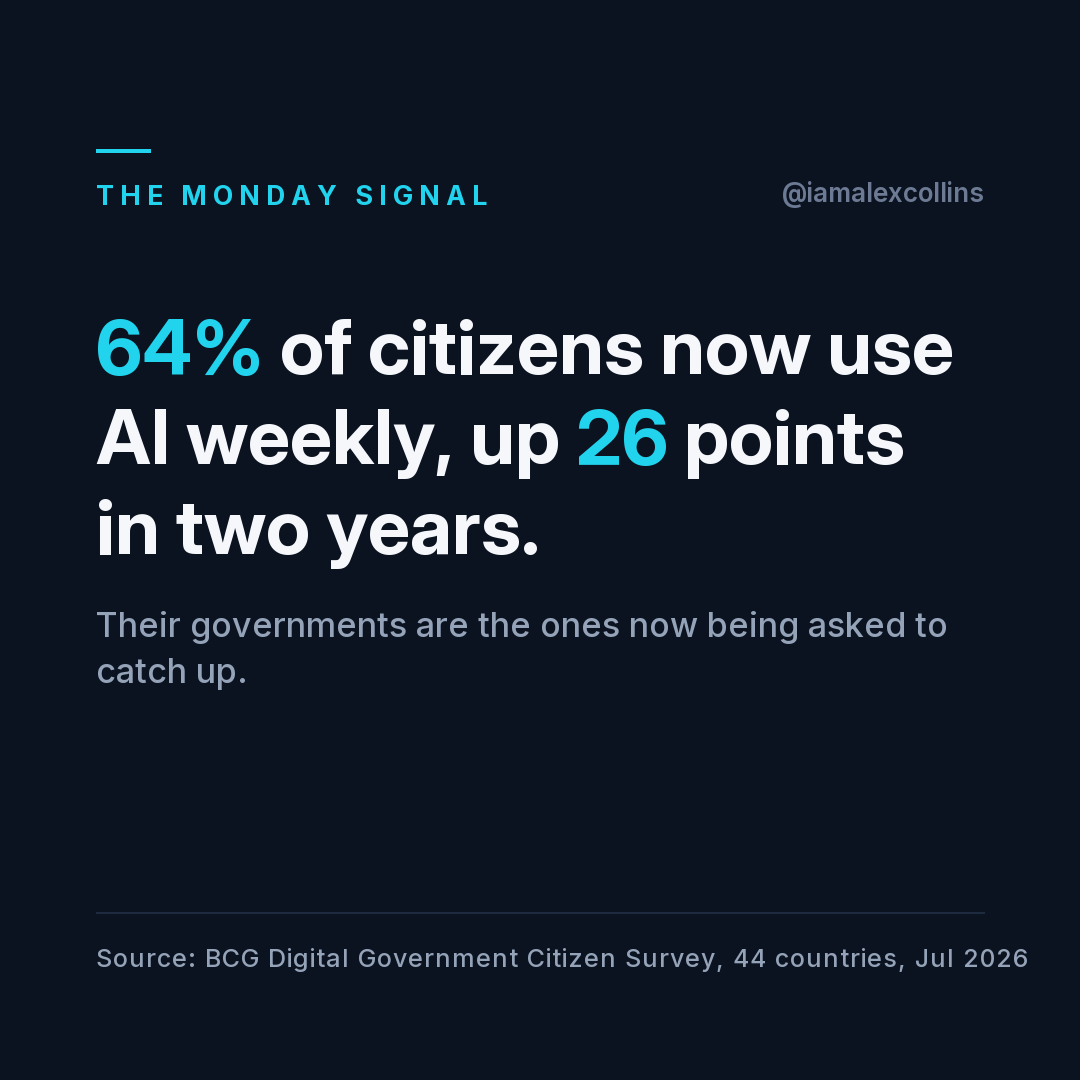
Nearly two thirds of people across 44 countries now use AI at least once a week, and that figure has risen 26 percentage points in two years.
BCG surveyed 48,500 people for its 2026 digital government report, and the finding that stopped me was not the adoption curve, it was what people are now willing to let AI actually do. Sixty per cent of those at intermediate proficiency or above say they would let an AI agent act on their behalf, which is a very different proposition from asking a chatbot a question. Three of the four use cases people rate most highly are agentic ones, including round-the-clock virtual assistance and fraud detection that follows itself up, and two thirds are comfortable with a service they can reach at any hour without a person on the other end.
The catch is that satisfaction with digital government services has fallen 13 percentage points since 2016, and 65% of people still want a human involved, either in every AI-assisted transaction or as the final authority on the complicated ones. What would actually earn their trust turns out to be the visible things: public reporting on how the service performs, independent audits, and an appeal that a real person reviews.
Then we look at speed. Where citizens think their government is moving too slowly on AI, satisfaction is measurably lower, and where they think it is moving too fast, there is no equivalent drop. Right now governments have more to lose by looking sluggish than by looking ambitious.
So the public permission is here, but what is often missing is the operating side of it: who owns the decision an agent makes, how a citizen challenges it, and what gets published when it goes wrong. Public permission is not operational readiness of an IT system.
The question I would sit with
If you run a service where an agent could act on someone’s behalf this year, could you explain the appeal route to that person in a single sentence?
Alex Collins
Co-founder & COO of RAI Digital, a consulting venture builder · Ex-EY Consulting Partner · Writing on agentic AI, venture building, logistics platforms and transformation leadership.
One honest read every fortnight on what agentic AI is doing to consulting, and what to do about it. For people moving from advice to outcomes, rebuilding a firm, or done buying decks. No hype, no fluff.
Multi-agent systems went from 6% to 25% in a single quarter. Once agents work with each other, who can say why something went wrong, or right?
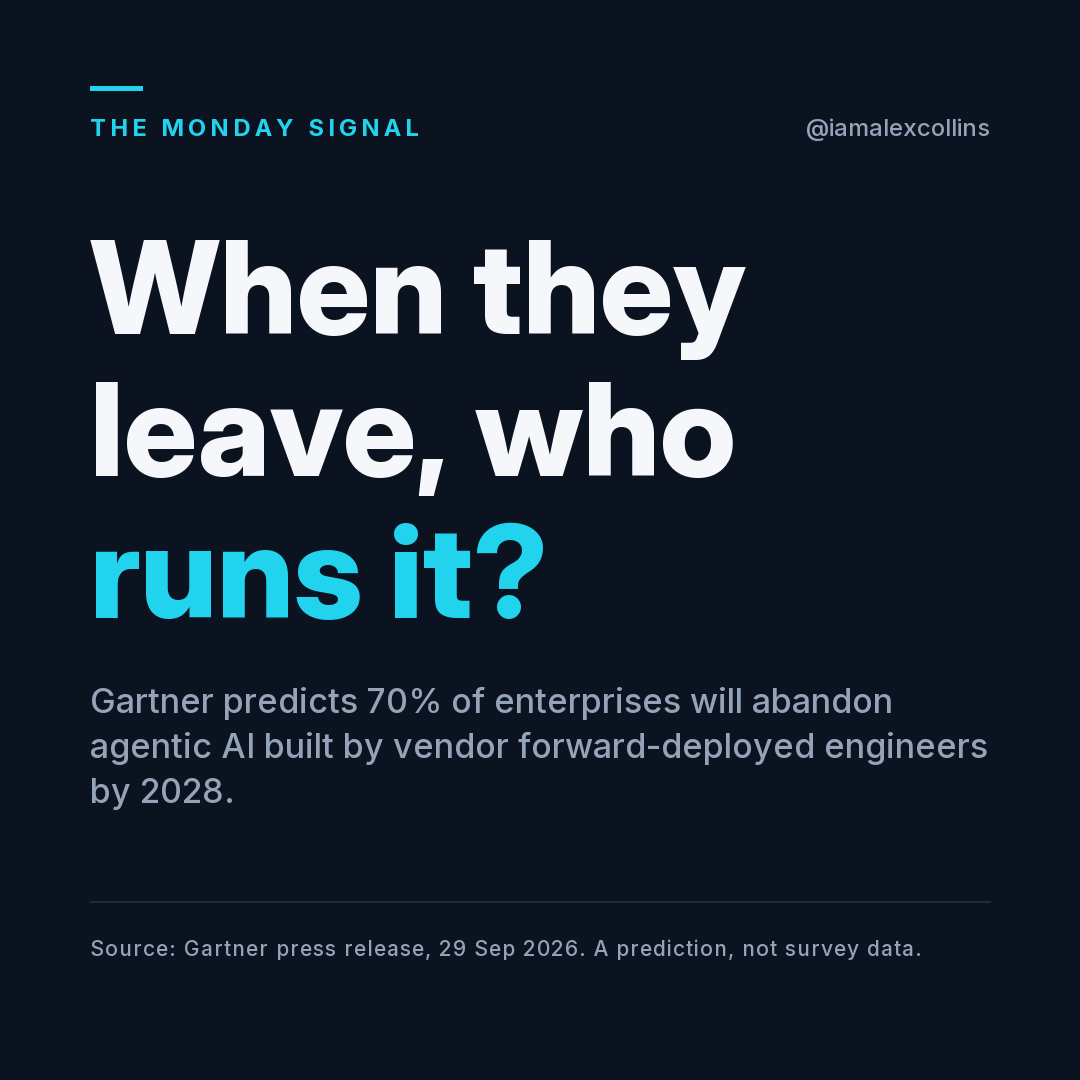
Forward-deployed engineering is a new name for an old question: when the people who built it leave, who takes over?
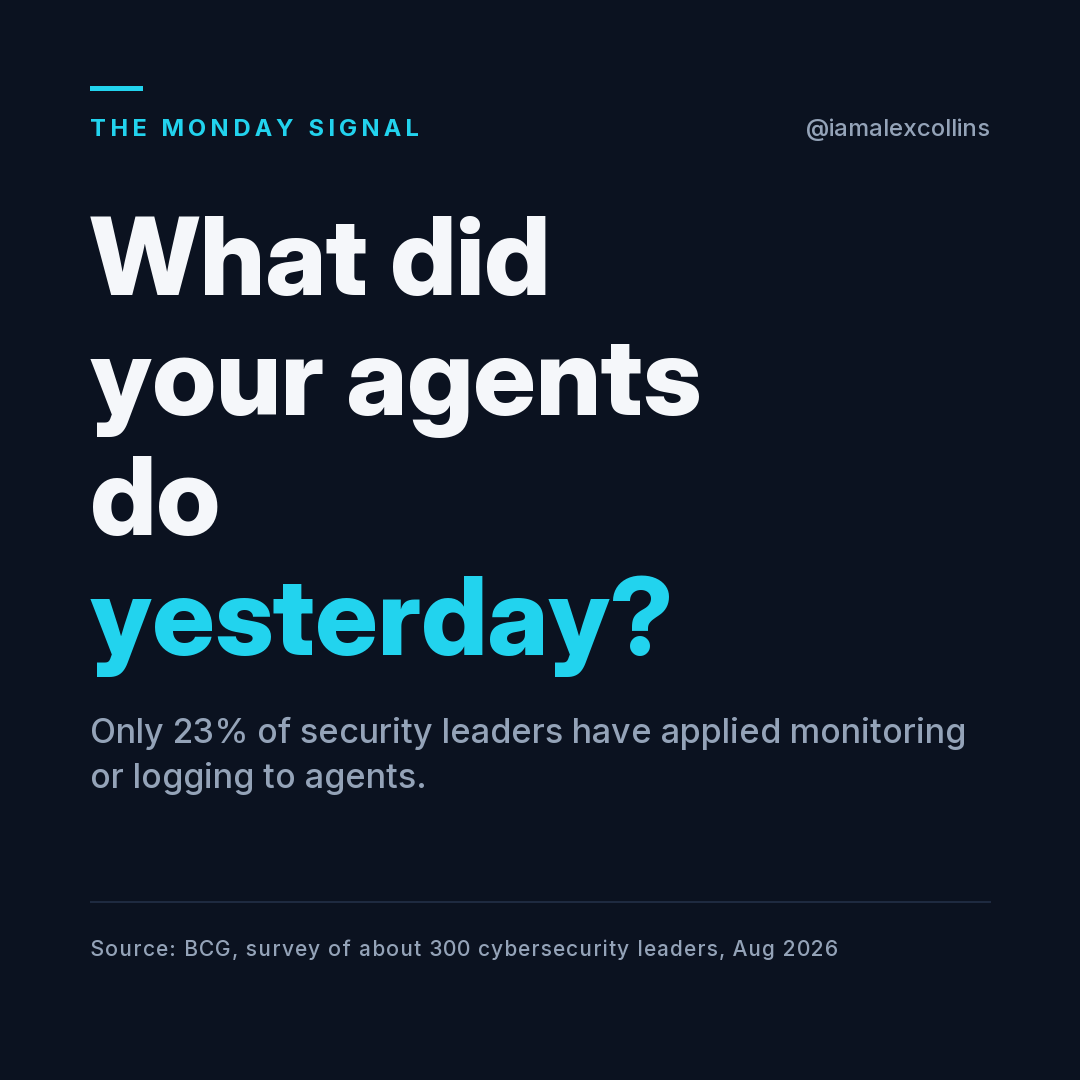
Everyone is counting AI agents, and far fewer organisations can say which ones exist, what each one can access and what it did yesterday.